


UK Buy-to-Let Mortgages for Overseas Borrowers Using a Company Structure
The UK property market remains one of the most attractive destinations for international real estate investors. Strong tenant demand, transparent legal frameworks, and long-term property appreciation make it a stable environment for building rental portfolios.

The UK property market remains one of the most attractive destinations for international real estate investors. Strong tenant demand, transparent legal frameworks, and long-term property appreciation make it a stable environment for building rental portfolios.
For overseas investors who want to purchase rental property in the UK, Buy-to-Let (BTL) mortgages structured through a company, typically a Special Purpose Vehicle (SPV), have become an increasingly common approach.
However, securing a UK BTL mortgage as a non-resident borrower involves different criteria compared to domestic investors. Lenders must consider factors such as jurisdiction risk, currency exposure, tax structures, and borrower residency.
This guide explains how UK Buy-to-Let mortgages work for overseas borrowers using a company structure, including the key requirements, benefits, lending criteria, and financing options available to international investors.
Why the UK Remains Attractive for Overseas Property Investors
International investors continue to see the UK as a safe and reliable property market for several reasons.
Market Stability
The UK benefits from:
● well-regulated financial institutions
● strong property rights and legal protections
● a transparent property transaction process
These features create confidence for overseas investors looking for long-term capital preservation.
Strong Rental Demand
Major UK cities such as London, Manchester, Birmingham, and Leeds continue to experience strong rental demand due to:
● population growth
● student and professional migration
● limited housing supply in key urban areas
This demand helps support consistent rental yields, making Buy-to-Let investments attractive.

Global Investment Hub
The UK remains a global financial centre that attracts investors from:
● Europe
● the Middle East
● Asia
● North America
As a result, lenders and finance specialists have developed mortgage products designed specifically for international investors.
What Is a UK Buy-to-Let Mortgage?
A Buy-to-Let mortgage is designed for purchasing property that will be rented to tenants rather than occupied by the borrower.
Unlike residential mortgages, BTL loans are primarily assessed based on the income potential of the property.
Typical features of UK Buy-to-Let mortgages include:
● interest-only mortgage options
● rental income affordability assessments
● higher deposit requirements than residential mortgages
● slightly higher interest rates
For international investors, BTL mortgages provide a structured way to finance property investments while preserving capital for additional acquisitions.
Can Overseas Investors Get a UK Buy-to-Let Mortgage?
Yes, overseas investors can obtain UK Buy-to-Let mortgages, but the process is more specialised than for UK residents.
Some mainstream banks may have restrictions on non-resident borrowers. However, specialist lenders and private credit providers regularly finance overseas investors purchasing UK rental property.
Typical requirements include:
● larger deposit contributions
● proof of international income or assets
● a suitable ownership structure (often a UK limited company)
● property valuation and rental yield analysis
Because the international lending landscape is complex, investors often work with specialist finance arrangers who structure the transaction and connect borrowers with suitable lenders.
Specialist finance advisors can help investors navigate the range of lenders and funding structures available in the UK market. Firms such as ROSCAP work with property developers and investors to structure and arrange property financing solutions, helping overseas borrowers connect with appropriate lenders, investors, and private credit providers depending on the nature of the project.
Why Overseas Investors Use a Company Structure
Many international investors choose to purchase UK property through a limited company structure, typically an SPV created specifically for property investment.
This approach offers several advantages depending on the investor’s financial and tax circumstances.
Potential Tax Efficiency
In the UK, companies can generally treat mortgage interest as a fully deductible business expense.
For individual landlords, tax relief on mortgage interest has been restricted in recent years. As a result, company structures may offer more favourable tax treatment for certain investors.
Professional tax advice should always be obtained before deciding on the appropriate structure.
Portfolio Growth and Scalability
Investors who plan to acquire multiple properties often find that a company structure simplifies portfolio management.
Using a company allows:
● clearer financial reporting
● easier portfolio expansion
● simplified accounting for multiple assets
Financial Separation
A company structure creates separation between personal assets and property investments.
This can provide clearer risk management and governance for professional investors.
Ownership Flexibility
Shares in a company can be transferred or restructured more easily than individual property titles, which may offer advantages for long-term estate or succession planning.
%20Structure.png)
What Is an SPV Property Company?
A Special Purpose Vehicle (SPV) isa limited company created specifically to hold property assets.
Most lenders prefer SPVs because they are simple, transparent, and designed purely for property investment.
SPV companies typically use the following UK business classification codes:
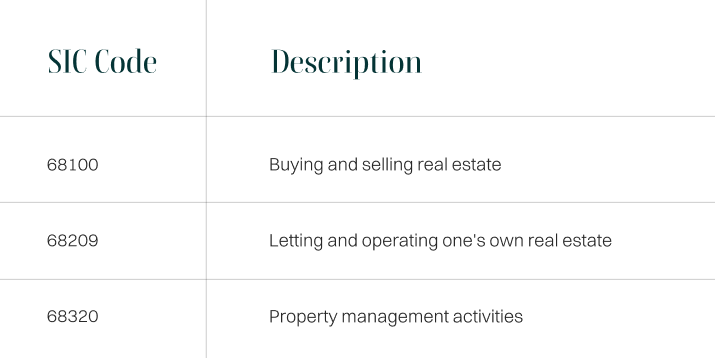
Using an SPV ensures the company’s activities are focused solely on property ownership and rental operations.
Lending Criteria for Overseas Company BTL Mortgages

When assessing overseas borrowers purchasing property through a company, lenders typically focus on several key factors.
Deposit Requirements
Most lenders require deposits of 25% to 40% of the property value.
Higher deposits reduce lender risk and improve mortgage approval chances.
Rental Coverage Ratio
The property must generate sufficient rental income to support mortgage repayments.
Lenders commonly require rental income to cover 125-145% of the mortgage payment when stress-tested at a higher interest rate.
Personal Guarantees
Even when borrowing through a company, lenders usually require personal guarantees from company directors.
This ensures the borrower remains responsible for the loan obligations.
Financial Due Diligence
International investors may need to provide additional documentation such as:
● overseas credit reports
● proof of income or assets
● bank statements
● identification and anti-money laundering documentation
The Mortgage Process for Overseas Borrowers

The process of obtaining a UK BTL mortgage typically follows several steps.
Step 1: Establish a Company Structure
Most overseas investors first create a UK SPV limited company to hold the property.
Step 2: Identify the Investment Property
Lenders will assess:
● location
● property type
● rental demand
● projected rental income
Step 3: Mortgage Agreement in Principle
An initial lender assessment indicate show much borrowing may be available.
Step 4: Property Valuation
The lender commissions a valuation to confirm both the property value and expected rental income.
Step 5: Legal and Compliance Checks
Solicitors conduct:
● title verification
● anti-money laundering checks
● company documentation review
Step 6: Mortgage Completion
Once approved, funds are released and the property purchase is completed.
Challenges Overseas Investors Should Consider
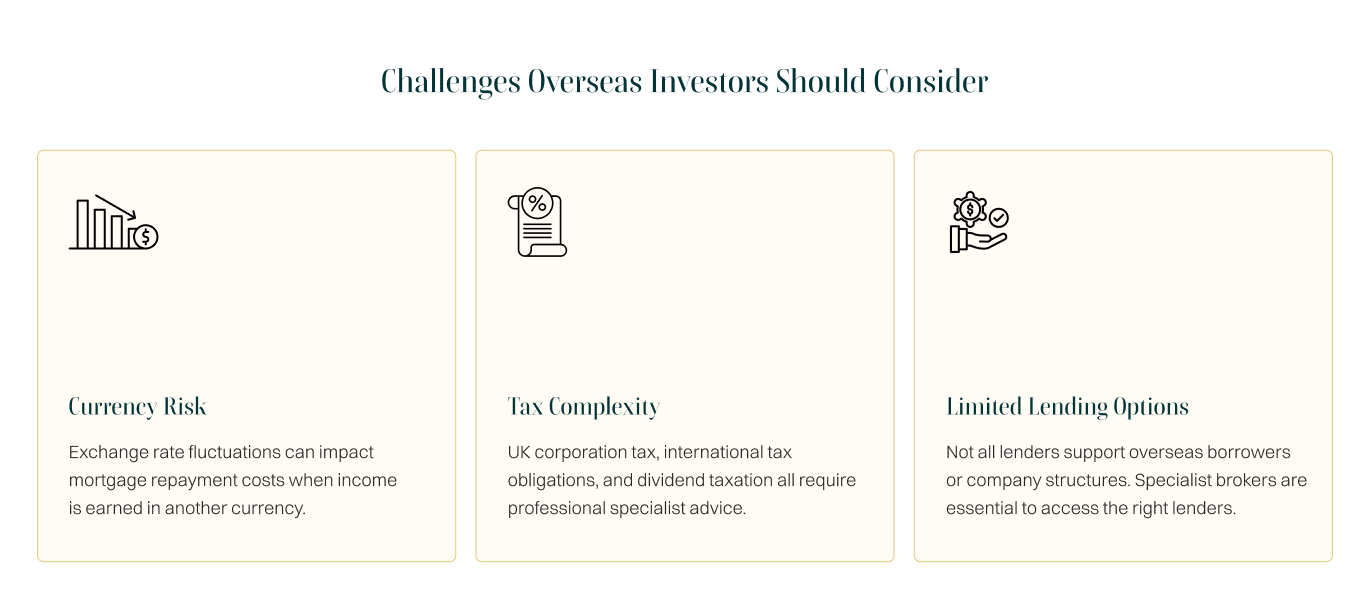
Although the UK market offers strong opportunities, international investors should also consider several potential challenges.
Currency Risk
Exchange rate fluctuations can impact the cost of mortgage repayments when income is earned in another currency.
Tax Complexity
Depending on residency and corporate structure, investors may need to manage:
● UK corporation tax
● international tax obligations
● dividend taxation
Professional advice from tax specialists is highly recommended.
Limited Lending Options
Not all lenders support overseas borrowers or company structures. Accessing the right lenders often requires specialist expertise.
How ROSCAP Supports International Property Financing
Structuring property finance for international investors often requires specialist expertise.
ROSCAP works with property developers and investors to structure and arrange financing solutions for real estate projects, helping borrowers access capital from lenders, investors, and private credit providers.
Rather than acting as a direct lender, ROSCAP focuses on:
● structuring development finance
● arranging bridging loans
● sourcing private credit funding
● designing tailored financing solutions for property transactions
This approach allows investors to access capital structures suited to complex property investments, including company-ownedBuy-to-Let portfolios and development projects.
To learn more about ROSCAP’s approach to property finance, visit our services page.
FAQs
Can overseas investors buy UK rental property?
Yes. International investors can purchase UK property and obtain Buy-to-Let mortgages through specialist lenders.
What deposit is required for overseas BTL mortgages?
Most lenders require a deposit between 25% and 40% of the property value.
Do overseas investors need an SPV company?
It is not always mandatory, but many lenders prefer properties to be purchased through anSPV company.
How is rental income assessed?
Lenders usually require rental income to cover 125-145% of mortgage payments.
Do overseas borrowers need a UK bank account?
Most lenders require a UK bank account to manage mortgage payments and rental income